Operational Transformation
When the Playbook No Longer Has the Answer.
Every founder reaches this point. The thing that made you successful is now the thing getting in the way. Your team is bigger but decisions are slower. You have more people but less clarity. The systems that worked at ten people don't work at thirty.This is not a failure of leadership. It is a signal that the organization needs to evolve. That's exactly the work we do.
What We See
Strategy That Never Sticks
The goals exist. The priorities keep shifting. Teams stay busy but traction is elusive. The plan never quite connects to the work.
Teams That Don’t Move as One
Decisions don't hold. The same topics resurface without resolution. You're not sure if the team is truly aligned or just really good at looking busy.
Silence Instead of Debate
Conflict goes unaddressed. Leaders don't speak up. Tension simmers until something breaks, and even then nobody wants to name it.
Leadership Bottlenecks
Too many decisions still come to you. You want to delegate but when you do things fall through. Without the right structure, it's easier to just handle it yourself.

How We Work
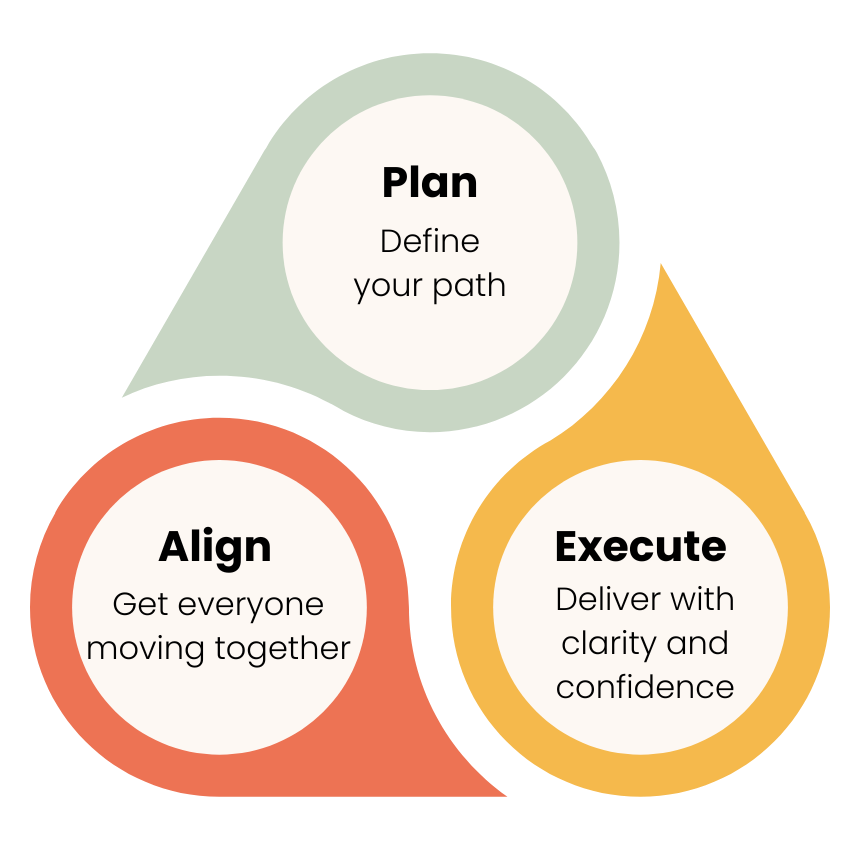
We don't show up with a framework and a slide deck. We start by understanding your business from the inside; how decisions get made, where trust exists, where it doesn't, and what's actually getting in the way.Every Organizational Transformation engagement begins with a structured diagnostic. It's the foundation everything else is built on. We won't recommend a path forward until we understand what's actually driving the problem.From there the work is embedded and hands-on. We sit in the rooms where the real work happens. We stay until what we build runs without us.
"One of our clients grew revenue by 33% in nine months. The breakthrough wasn't a new idea. It was building the operational foundation their growth had been waiting for."
Does This Feel Like the Right Conversation for You and Your Business?
If your organization is growing but something isn't keeping pace, let's talk. The first conversation is about understanding where you are. Nothing more.
FAQ
How long does an engagement usually last?
Most Organizational Transformation engagements run six to twelve months. The diagnostic at the start informs the scope and timeline.
What does the diagnostic process involve?
A structured assessment of your operations, leadership dynamics, and organizational health. It's designed to surface the real issues, not just the symptoms.
Do we need to commit to a full engagement upfront?
No. The diagnostic is the starting point. It gives both of us the information needed to decide whether a deeper engagement makes sense and what it should look like. Either way you are left with a clear perspective on the state of your business and a plan you can execute with or without us.
How is this different from a typical management consultant?
We don't hand off a report and leave. We stay embedded in the work until the systems hold and the team can run without us.